
Nigeria is one of Africa’s most influential nations—rich in culture, diversity, and resilience. From ancient kingdoms to colonial rule and modern democracy, the story of Nigeria is a powerful journey of transformation, struggle, and growth.
Early Civilizations and Kingdoms
Long before colonial rule, the region that is now Nigeria was home to sophisticated civilizations and thriving trade networks.
Some of the most notable early societies include:
- Nok Civilization (c. 1000 BCE – 300 CE): Famous for terracotta sculptures and early ironworking.
- Kingdom of Nri (Igbo civilization): Known for its advanced political and religious systems.
- Oyo Empire: A powerful Yoruba empire that dominated trade and military influence in West Africa.
- Sokoto Caliphate: Established in the early 19th century after the Fulani Jihad, it became one of the largest empires in Africa.
These societies had structured governance, vibrant art, strong economies, and extensive trade routes connecting them to North Africa and beyond.
The Arrival of Europeans and the Slave Trade
Portuguese traders first arrived on the Nigerian coast in the 15th century. Over time, European involvement expanded, particularly through the transatlantic slave trade.
Millions of Africans were forcibly transported to the Americas during this period. By the 19th century, the slave trade declined and was replaced by “legitimate trade” in palm oil, cocoa, groundnuts, and other commodities.
This shift increased European economic influence and laid the groundwork for colonial control.
British Colonial Rule
By the late 1800s, Britain had established control over many regions through trade agreements and military force. The territories were administered under the British Empire.
A major turning point came in 1914 when British colonial officer Frederick Lugard merged the Northern and Southern protectorates to form modern Nigeria. This event, known as the Amalgamation of 1914, unified diverse ethnic and cultural groups under one administration.
Colonial rule brought:
- Western education and Christianity in the south
- Railways, roads, and new administrative systems
- Economic restructuring focused on export crops
However, it also created deep regional inequalities and tensions that still influence Nigeria today.
The Road to Independence
After World War II, nationalist movements grew stronger. Nigerian leaders demanded self-governance and political freedom.
Key figures included:
- Nnamdi Azikiwe
- Obafemi Awolowo
- Ahmadu Bello
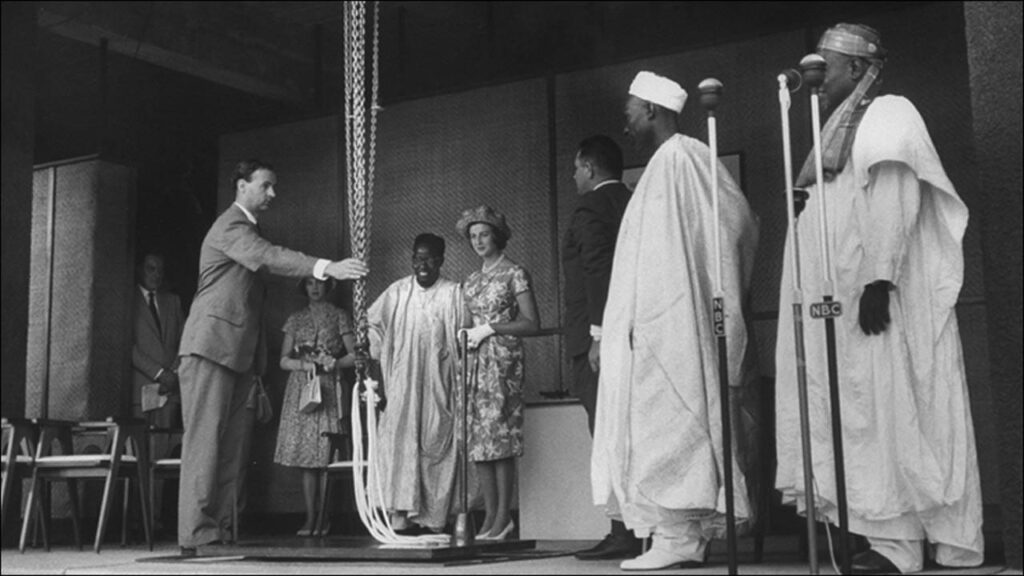
On October 1, 1960, Nigeria gained independence from Britain. In 1963, the country became a republic with Nnamdi Azikiwe as its first President and Abubakar Tafawa Balewa as Prime Minister.
The Nigerian Civil War (1967–1970)
Nigeria’s early independence years were marked by political instability and ethnic tensions. In 1967, the southeastern region declared independence as the Republic of Biafra.
This led to the Nigerian Civil War, a devastating conflict that lasted three years and resulted in millions of deaths due to fighting and famine. In 1970, the war ended with Nigeria remaining a united nation.
Military Rule and Political Transitions
Following the civil war, Nigeria experienced several military coups and decades of military governance. While the country benefited from oil wealth discovered in the Niger Delta, corruption and economic challenges persisted.
A major turning point came in 1999 when Nigeria returned to democratic rule with the election of Olusegun Obasanjo as president.
Nigeria in the 21st Century
Today, Nigeria is Africa’s most populous country and one of its largest economies. It is known for:
- A booming entertainment industry (Nollywood)
- A strong entrepreneurial culture
- Rich cultural diversity with over 250 ethnic groups
- A growing technology and startup ecosystem
Despite challenges such as infrastructure gaps and governance issues, Nigeria continues to play a key role in African and global affairs.
Conclusion
Nigeria’s history is a story of resilience, diversity, and continuous transformation. From ancient empires to modern democracy, the nation has overcome immense challenges while shaping a unique cultural and political identity.
Understanding Nigeria’s past helps us appreciate its present—and envision a future filled with opportunity and progress.