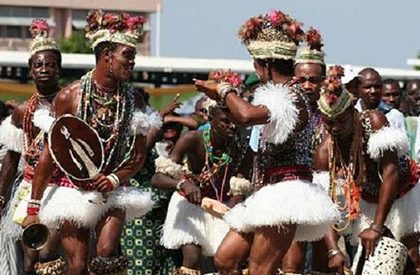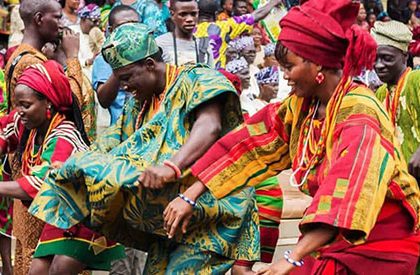


The origin of the Hausa people is a blend of oral tradition, archaeology, linguistics, and historical records. While some aspects remain debated among historians, there is broad agreement that the Hausa developed as an indigenous civilization in what is now northern Nigeria and southern Niger over many centuries. Their history is one of political organization, commercial prosperity, and cultural influence across West Africa.
The Origin of the Hausa People
The Hausa are one of the largest ethnic groups in Africa, numbering over 80 million people when including those of mixed Hausa heritage. They are predominantly found in northern Nigeria and southern Niger, with significant communities in Ghana, Cameroon, Chad, Benin, Sudan, and other parts of West Africa due to centuries of migration and trade.
Indigenous Origins
Most modern historians and archaeologists believe that the Hausa evolved from indigenous populations living in the savannah regions of present-day northern Nigeria and southern Niger. These communities gradually developed organized settlements between approximately 500 BCE and 1000 CE.
The Hausa language belongs to the Chadic branch of the Afroasiatic language family. This linguistic evidence suggests that the ancestors of the Hausa had lived in the region for thousands of years, developing their own unique culture while interacting with neighboring peoples such as the Kanuri, Nupe, Yoruba, Fulani, and Tuareg.
Rather than being founded by a single migrating group, the Hausa civilization emerged through the gradual blending of local farming communities, traders, craftsmen, and political leaders.
The Bayajidda Legend
The best-known traditional account of Hausa origins is the Legend of Bayajidda, preserved in the historical chronicle known as the Kano Chronicle.
According to the legend:
Bayajidda was a prince from the Middle East, often said to have come from Baghdad.
After leaving his homeland, he travelled across Africa until he arrived in the city of Daura.
At the time, the people of Daura were terrorized by a giant serpent named Sarki, which prevented them from drawing water except on one day each week.
Bayajidda killed the serpent, freeing the people.
In gratitude, the queen of Daura, known as Daurama, married him.
Their son, Bawo, became the ancestor of the rulers of the Hausa kingdoms.
From Bawo’s descendants came the founders of the famous seven Hausa states.
Most historians regard this story as a symbolic tradition rather than literal history. It likely reflects ancient political alliances and the influence of trans-Saharan trade rather than an actual migration from Baghdad.
The Hausa Bakwai (The Seven True Hausa States)
According to tradition, Bayajidda’s descendants established the seven original Hausa kingdoms, collectively known as the Hausa Bakwai:
Daura
Kano
Katsina
Zaria (formerly Zazzau)
Gobir
Rano
Biram
Each kingdom specialized in different economic activities:
Kano became renowned for trade, dyeing, and textile production.
Katsina became an important center of Islamic scholarship.
Zazzau (Zaria) was known for military strength and trade.
Daura retained great cultural and spiritual significance.
Gobir developed into a powerful military state.
Together, these kingdoms formed the political and cultural heartland of the Hausa people.
The Banza Bakwai (The Seven Illegitimate States)
Hausa tradition also identifies seven neighboring states called the Banza Bakwai (“the seven illegitimate states”), which were influenced by Hausa civilization but were not considered descendants of Bayajidda.
These traditionally include:
Kebbi
Zamfara
Yauri
Nupe
Gwari
Kororofa
Ilorin (lists vary in different traditions)
These states maintained close economic and political ties with the Hausa kingdoms.
Growth Through Trade
Between the 11th and 16th centuries, the Hausa states became major commercial centers. Their location allowed them to connect:
North Africa
The Sahara Desert
West Africa
The forest regions of southern Nigeria
Hausa merchants traded:
Gold
Leather goods
Textiles
Salt
Kola nuts
Slaves (a common feature of many precolonial African and global economies)
Horses
Cities such as Kano and Katsina developed into wealthy trading centers, attracting merchants from across Africa.
Arrival of Islam
Islam reached Hausaland gradually between the 11th and 14th centuries through trans-Saharan merchants and Muslim scholars.
By the 15th century:
Many Hausa rulers had accepted Islam.
Mosques were constructed throughout the kingdoms.
Islamic courts and legal systems became established.
Arabic literacy spread among scholars.
Hausa literature flourished using the Arabic-derived Ajami script.
Despite this, many rural communities continued to combine Islamic beliefs with older indigenous religious practices for centuries.
The Fulani Jihad
In the early 19th century, Usman dan Fodio led a major Islamic reform movement beginning in 1804.
The jihad defeated many Hausa rulers and resulted in the establishment of the Sokoto Caliphate, one of the largest precolonial states in Africa.
Although the ruling elite changed in many areas, Hausa language and culture remained dominant. Over time, Hausa and Fulani communities became closely intertwined, and today many people identify as Hausa-Fulani.
Colonial Period
At the beginning of the 20th century, the United Kingdom incorporated the Hausa states into the British colonization of Northern Nigeria.
The British governed largely through existing traditional rulers under a policy of indirect rule, allowing many Hausa emirates to retain significant authority while operating within the colonial administration.
Hausa Today
Today, the Hausa remain one of Africa’s most influential peoples. Their language serves as a major lingua franca across West Africa and is widely used in commerce, broadcasting, education, and religious life. Hausa cultural traditions—including architecture, literature, music, dress, and craftsmanship—continue to shape the social and cultural landscape of the region.
Historical Significance
The history of the Hausa illustrates how indigenous African societies developed sophisticated urban centers, long-distance trade networks, systems of governance, and centers of learning well before European colonization. While the Bayajidda legend remains an important part of Hausa cultural identity, modern historical scholarship generally concludes that the Hausa emerged primarily from indigenous populations in the central Sudanian savannah, with their civilization enriched over time through interactions with neighboring African peoples and the wider Islamic world.