
The Yoruba people are one of the largest ethnic groups in Africa and one of the three major ethnic groups in Nigeria. They are primarily found in the southwestern states of Nigeria, including Lagos, Oyo, Ogun, Osun, Ondo, Ekiti, and parts of Kwara and Kogi States. Yoruba communities are also found in neighboring Benin and Togo, as well as in the Americas and the Caribbean due to historical migration and the transatlantic slave trade.
Origins of the Yoruba People
According to Yoruba oral tradition, the Yoruba trace their ancestry to Oduduwa, who is believed to have established the first Yoruba kingdom at Ile-Ife. Ile-Ife is regarded as the spiritual homeland and cradle of Yoruba civilization.
Yoruba mythology teaches that the Supreme Being, Olodumare, sent Obatala to create the earth at Ile-Ife. Oduduwa later became associated with the establishment of the kingdom and is regarded as the ancestor of many Yoruba royal families.
Modern historians and archaeologists generally believe that the Yoruba developed as an indigenous West African civilization over many centuries, rather than migrating from distant regions such as Egypt or Arabia as some earlier theories suggested.
The Rise of Yoruba Kingdoms
As the population expanded, descendants of Oduduwa established numerous kingdoms and city-states across Yorubaland. Some of the most important included:
- Oyo Empire
- Ijebu Kingdom
- Egba Kingdom
- Ondo Kingdom
- Ekiti Kingdoms
Each kingdom was ruled by a king known as an Oba and had its own governing institutions, traditions, and military organization.
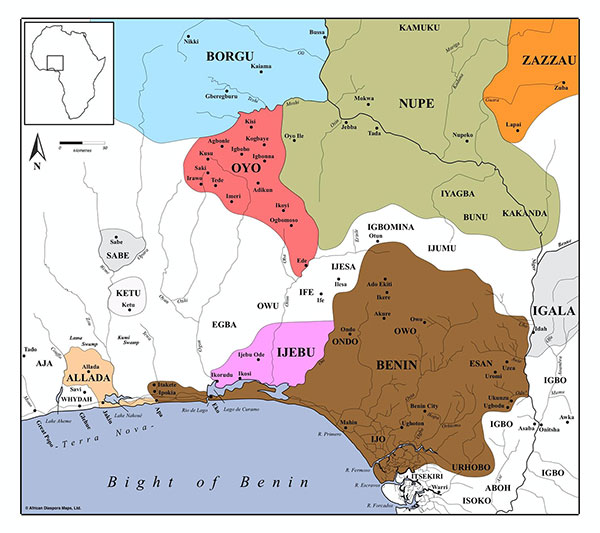
The Oyo Empire
Between the 15th and 18th centuries, the Oyo Empire became the most powerful Yoruba state. Under rulers known as the Alaafin, Oyo developed a sophisticated political system and a strong cavalry military force.
The empire controlled important trade routes and engaged in commerce with neighboring states, dealing in goods such as kola nuts, textiles, leather products, and agricultural produce. Oyo’s influence extended into parts of present-day Benin and other areas of West Africa.
Yoruba Culture and Religion
The Yoruba developed a rich culture that includes:
- The Yoruba language, one of the most widely spoken African languages.
- Traditional religion centered around Olodumare and numerous deities known as Orishas.
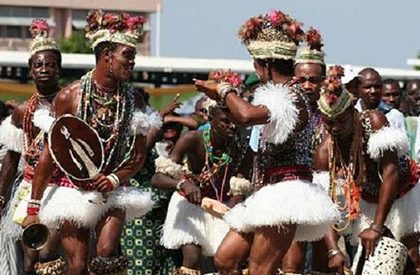
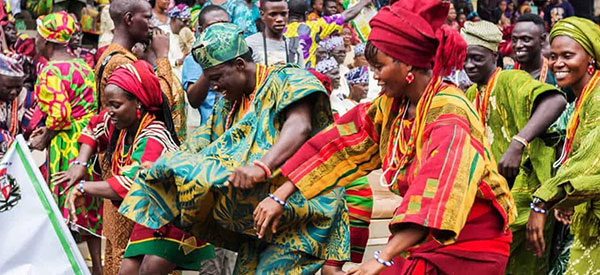
- Festivals, music, drumming, dance, and masquerade traditions.
- Exceptional artistic achievements, especially the bronze and terracotta sculptures of Ife.
Yoruba traditional religion influenced spiritual practices in countries such as Brazil, Cuba, and Trinidad and Tobago through religions such as Candomblé and Santería.
Colonial Era and Modern Nigeria
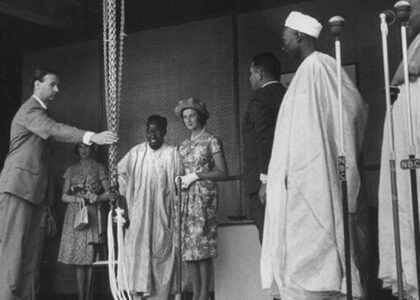
During the late 19th century, Yorubaland gradually came under British colonial control and was incorporated into the British Protectorate of Nigeria. Following Nigeria’s independence in 1960, the Yoruba became one of the country’s most influential ethnic groups in politics, business, education, and culture.
Prominent Yoruba figures have played significant roles in Nigeria’s development, including Obafemi Awolowo and Bola Ahmed Tinubu.
Legacy of the Yoruba People
Today, the Yoruba are known for their entrepreneurial spirit, educational achievements, vibrant arts, and strong cultural identity. Yoruba traditions continue to influence literature, music, religion, and politics both within Nigeria and across the world.
Their history represents one of Africa’s oldest and most sophisticated civilizations, with a legacy that continues to shape modern Nigeria and the global African diaspora.